

How to choose the right bionutrients for your manufacturing process
Fermentation processes require a carefully balanced supply of nutrients to support cellular metabolism and biomass formation, ultimately enabling efficient production of the desired fermentation product.
The choice of bionutrient can significantly impact process performance influencing yield, productivity and overall batch output. Different microorganisms and fermentation processes have specific nutritional requirements, so selecting the right fermentation nutrients is essential.
Read on to discover what to consider when choosing bionutrients for your fermentation process, including which yeast-based bionutrients to choose to guarantee reproducible results and performance.
Why does nutrient selection matter in fermentation medium formulation?
The selection of an appropriate nutrient formulation is a critical part of fermentation process development.
Microorganisms require a precise balance of macro- and micronutrients to optimise performance and maximise output. Providing these nutrients in an appropriate bioavailable form and concentration contributes to:
- Improved microbial growth and biomass formation
- Higher productivity and titres
- Improved fermentation yields
- Consistent, reproducible batch output
- Efficient, robust and scalable production processes
Choosing the wrong solution can have the opposite effect: insufficient, unbalanced or poorly bioavailable nutrients may restrict growth and product formation, resulting in reduced productivity, lower yields and less consistent process performance.
The role of functional components in yeast-based bionutrients
Microorganisms need a range of nutrients, beyond a primary carbon source, to support cellular growth, metabolism and target product output. Yeast-derived bionutrients naturally contain multiple growth factors that benefit the manufacturing process:
Amino acids and peptides
Amino acids and peptides are important sources of organic nitrogen for microbial growth. They provide building blocks for proteins, enzymes and other cellular structures. Adding amino acids to fermentation media can reduce the need for biosynthesis and supply essential amino acids that certain microorganisms cannot produce themselves.
Microorganisms can differ in how effectively they utilise individual amino acids and peptides. Therefore, the amino acid and peptide profile should be matched to the metabolic requirements of the production microorganism and the intended fermentation outcome.
Vitamins
Yeast naturally contains a broad range of B-complex vitamins that support the metabolic reactions in energy generation and biosynthesis. As some microorganisms have a limited ability to produce certain vitamins themselves, supplying these nutrients through fermentation media can support efficient metabolism and more consistent fermentation performance.
Nucleotides
Nucleotides are the building blocks required for DNA, RNA, and cellular energy-transfer molecules. When provided through yeast-derived bionutrients, they can reduce the metabolic effort required for microorganisms to synthesise them independently. This is particularly beneficial for biomass formation and cell division in fast-growing or nutritionally demanding microorganisms.
Minerals
Yeast-derived ingredients naturally provide a range of minerals and trace elements as part of their broader nutritional profile. Magnesium, potassium, phosphorus, zinc and other trace elements support enzyme activity and cellular regulation. The process typically requires small quantities of these compounds, but insufficient availability can limit growth and productivity.
Carbohydrate
Some yeast-derived ingredients retain naturally occurring carbohydrates, providing functionality beyond basic nutritional needs. For example, trehalose is associated with cellular stress protection and can help support protein and membrane stability. Depending on the fermentation process, carbohydrate-rich yeast ingredients can contribute to cell fitness under stressful process conditions.
What should you consider when selecting yeast-based bionutrients?
Selecting a bionutrient involves more than comparing the nutritional composition of different products. To find the right bionutrient solution, manufacturers must consider their fermentation process and desired production outcome:
1. What nutrient profile do you need?
Establish which functional nutrients the microorganism needs, and how to track results. Remember: the balance of functional ingredients will influence the suitability of a bionutrient for a specific process.
2. What are your fermentation goals?
Consider how you want the bionutrient to influence fermentation performance: Rapid microbial growth? Higher productivity? Greater yields? The answer will help determine which nutritional characteristics are most relevant.
3. What are your process requirements?
Depending on the application and market, you’ll need to consider sourcing, regulatory requirements and qualification of raw materials. For example, yeast-derived ingredients provide a non-animal, allergen-free source of complex nutrients for manufacturers looking to avoid some of the additional considerations associated with animal-derived materials.
4. What are the process costs?
Poor yield, productivity and batch consistency can all affect manufacturing costs. Assess these factors together to get a clearer picture of the value a bionutrient can deliver.
These questions provide a good starting point, but if you want to explore further to find the right solution for your manufacturing needs, our bionutrients specialists can help.
Advanced bionutrients with X-SEED® by Ohly
Ohly’s X-SEED® portfolio brings together a range of yeast-derived solutions designed around these different requirements. X-SEED® solutions can be differentiated according to their composition and functionality.
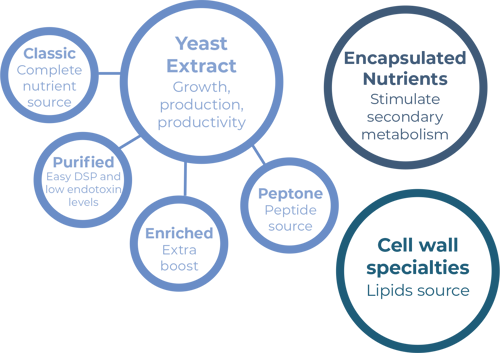
Classic complete and enriched nutrient sources
Classic yeast extracts provide a complete source of nutrients, including the amino acids, peptides, vitamins, minerals and other compounds naturally present in yeast. Enriched yeast extracts build on this nutritional foundation by providing additional functional components. The X-SEED® portfolio contains various solutions that are enriched with a specific functional component to allow manufacturers to select the nutrient profile they need. For example X-SEED® Nucleo Advanced (enriched in nucleotides),or X-SEED® Vitaboost (enriched in vitamins).
Purified and peptide-based solutions
For processes where downstream processing or purity is particularly important, purified yeast extracts offer an alternative with easier downstream processing (DSP) and low endotoxin levels. Yeast peptones provide a source of peptides that microorganisms can readily utilise. Solutions such as X-SEED® Peptone, and X-SEED® Carbo Peptone provide different nutritional profiles for specific fermentation processes.
Specialised encapsulated nutrients
The X-SEED® range extends beyond nutritional support, with encapsulated nutrients such as X-SEED® Cell FX and X-SEED® Cell FX Plus are designed to stimulate secondary metabolism, while cell wall specialties such as X-SEED® Lipid FX provide a source of lipids. These solutions allow manufacturers to consider not only the basic nutritional requirements of the microorganism, but also the specific functional characteristics that may influence each fermentation process.
Choosing the right solution with Ohly Bionutrients
At Ohly, our X-SEED® portfolio provides a range of yeast-derived bionutrient solutions to help customers gain high yields and competitive edge. We combine scientific innovation with practical expertise, to ensure reproducible microbial performance with batch-to-batch consistency in both composition and biological performance. Our team can help you identify the right solution to best fit your fermentation process, guiding you through key formulation considerations and tailoring our solutions to your processing requirements.
Find out more
Explore the X-SEED® by Ohly portfolio or just get in touch with the bionutrients experts at Ohly today.